Heads up: some links on this page are affiliate links. If you book through them, miamitake.com may earn a commission.
An Autopsy of Paradise, Performed Without Anesthesia
Let me tell you something about Key West that nobody on Instagram will ever admit.
The island is a con. A magnificent, sun-drenched, salt-stung, historically significant, spiritually disorienting con, and the mark is you, and you’re going to love every second of being taken.
You pass Islamorada and the sky is full of what looks like enormous bats and your best friend, in the passenger seat, is slathering coconut oil on his stomach because “it helps with the tanning process.” To which you reply: “We don’t have a convertible.” To which you end up in a debate on whether or not it matters because, as he says: “Tanning is a state of mind.” To which the voice of reason in your head replies: “You’re going to Key West. Buckle up. This is the norm.”
The part where the road tests you
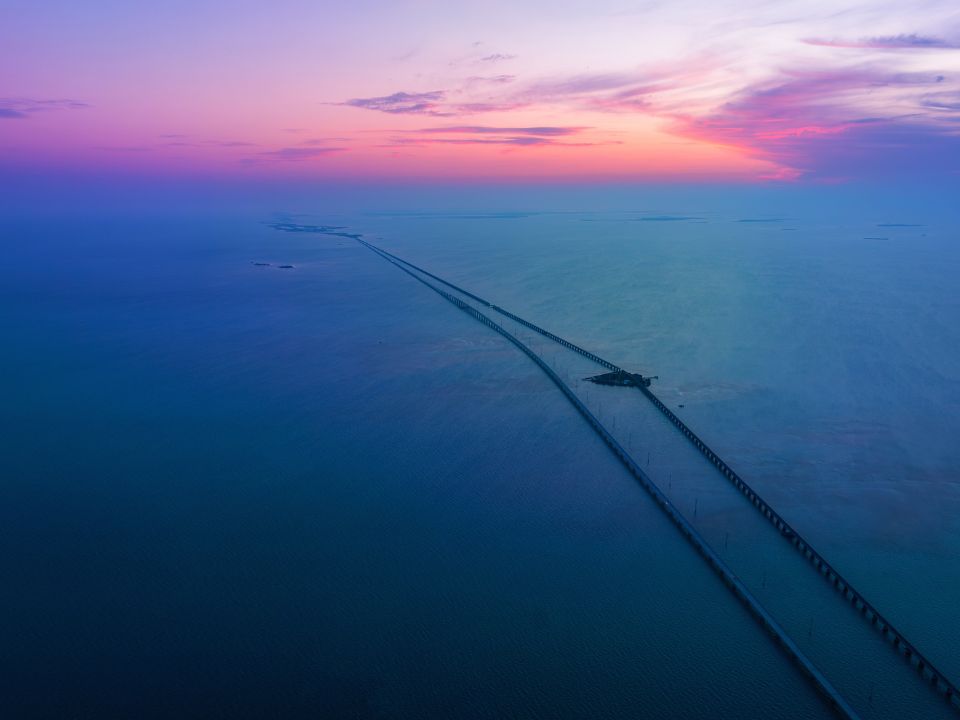
I arrived the first time like everyone else. Sweating through a shirt that had given up. Three hours south of Miami on a road that is essentially America’s longest dare, a ribbon of crumbling asphalt suspended over water and mangroves and ecological miracles that smell faintly of low tide and bad decisions.
Three hours that had turned into six because on No Name Key, a deer the size of a supermarket sample decided to cross the road and then, midway through, take a nap. The Overseas Highway. Forty-two bridges. Zero shortcuts. The kind of drive that makes a man philosophical about his own commute by mile marker 47.
Driving the Overseas Highway into Key West is Tarkovsky in The Zone, slow, hypnotic, and lightly menacing. A pelican watches you from a guardrail with the specific contempt of someone who has seen this before and gives it maybe forty minutes.
The island looks back
You arrive. You park. And then, and this is the part nobody warns you about, the island looks at you.
Like a bouncer at a club that doesn’t have a dress code but somehow still judges you. Like an impressionist painting that’s decided to become sentient and now has opinions about your footwear. And if you pass, if you’re weird enough, curious enough, broke enough, or just unhinged enough, it lets you in.
Really in. Past the tourist traps. Past the polished hotel staff down Duval who say “bro” a lot. Past the faux beaches.
What Is Key West, Exactly
Key West, at its core, is a geography lesson for people who failed geography.
Key West is not a beach town. I remember my wife driving down to Key West, “Beaches!” Midway down Duval, with her sand bucket, she turns and yells, “Those beaches… they stink!”
Let me say that again because I need you to hear it before you pack your SPF 50 and your Airbnb confirmation and your optimistic budget spreadsheet. Key West. Is not. A beach town. It is a city that happens to be surrounded by water. It is a city that was once a wrecking capital, meaning its economy was literally built on salvaging ships that ran aground on the reef. Which is, if you think about it for more than three seconds, the most honest metaphor for everything that has followed.
Key West is four miles long and two miles wide. That’s it. That’s the whole operation. Smaller than some Walmart parking lots I’ve visited in states that shall remain nameless. And yet it contains, stuffed inside itself like a clown car somehow trapped in Santa’s bag: Hemingway’s house (and his 60-some polydactyl cats, all descended from the original, all looking at passersby with the same contemptuous wisdom of a Nobel laureate who has seen things); the Little White House where Truman came to decompress from the weight of mid-century history; a street called Duval that functions as a kind of open-air variety show; and, hovering over all of it like a friendly ghost with a Hawaiian shirt, the entire mythological apparatus of one James William Buffett, who turned this speck of coral into the world’s most successful lifestyle brand.
The chicken government
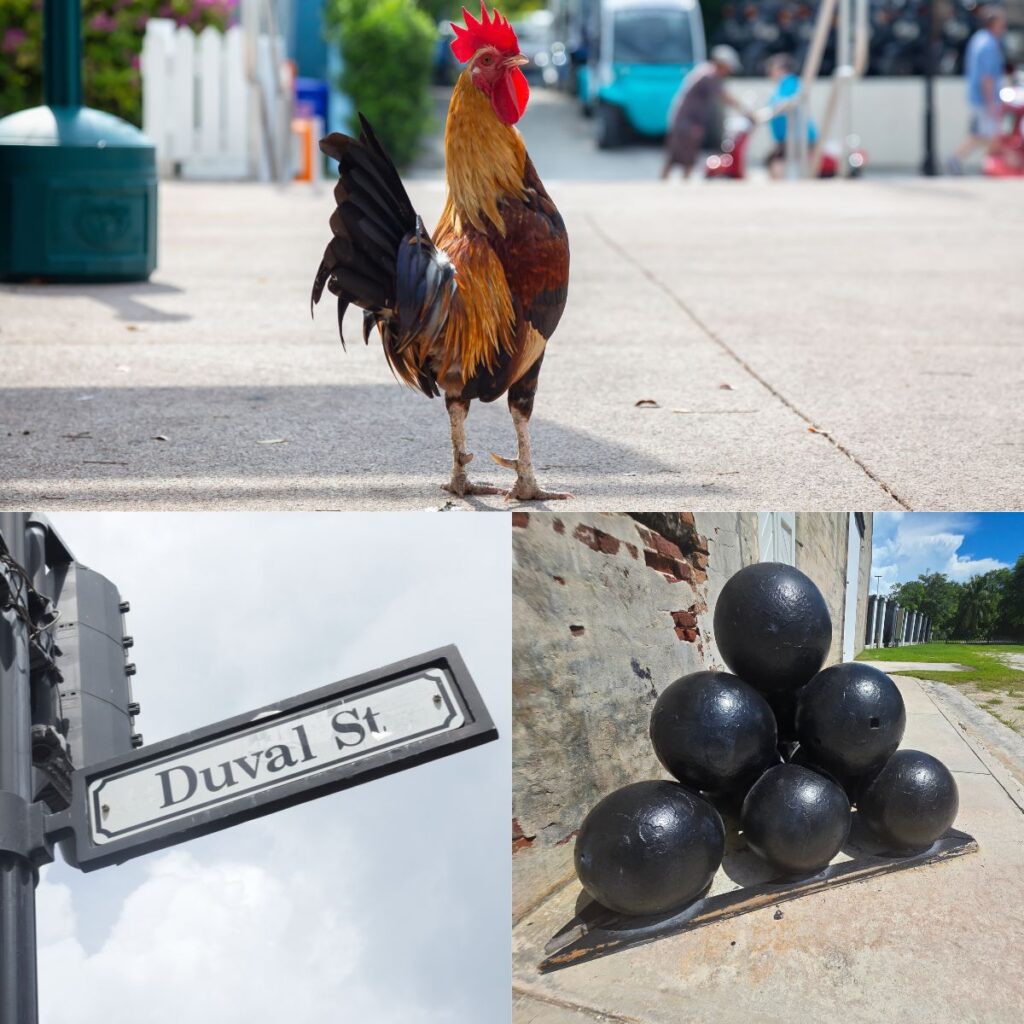
And then there are the chickens.
The feral chickens.
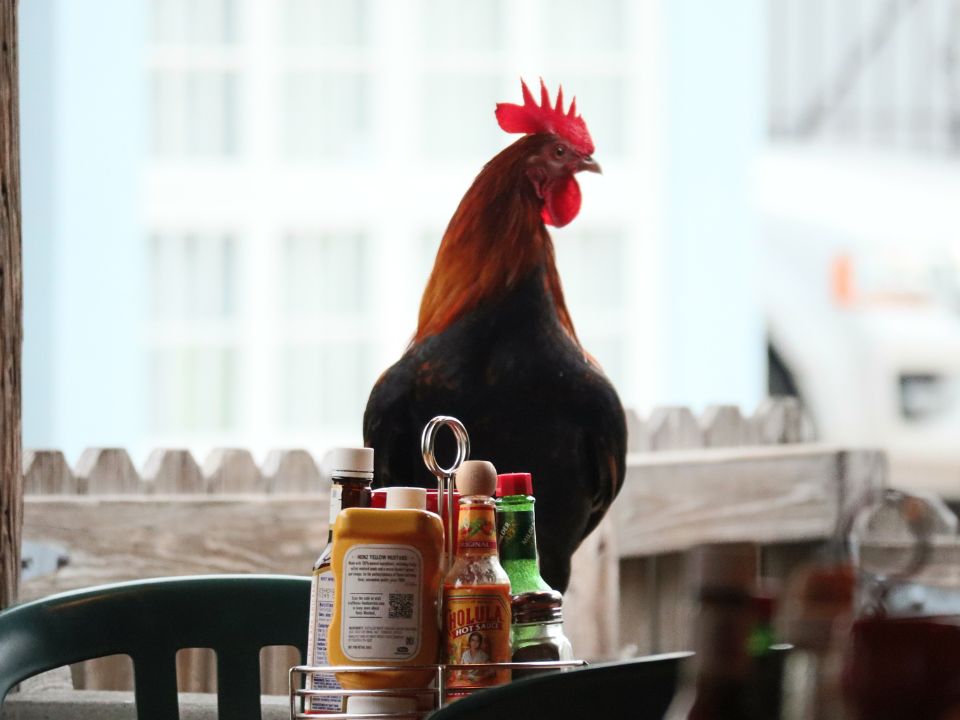
They are everywhere. They are protected by law. They do not care about you. They have been here longer than the tourists and they will be here long after the last margarita machine rusts into the sea. Thousands of small, feathered descendants of velociraptors looking at the bugs that survived the last hurricane and going:
“Lunch.”
I once watched a rooster grab the corner of a man’s shirt and walk away dragging a Tommy Bahama print like a victory flag. I understood then that this island operates by different rules.
Key West is the only city in America where you can walk down Duval Street at two in the afternoon with a lantern looking for an honest man and actually find one. He’s just also looking for his flip-flop and deeply confused about what day it is. Diogenes would have fit right in. Though they would have charged him full rack rate for the barrel.
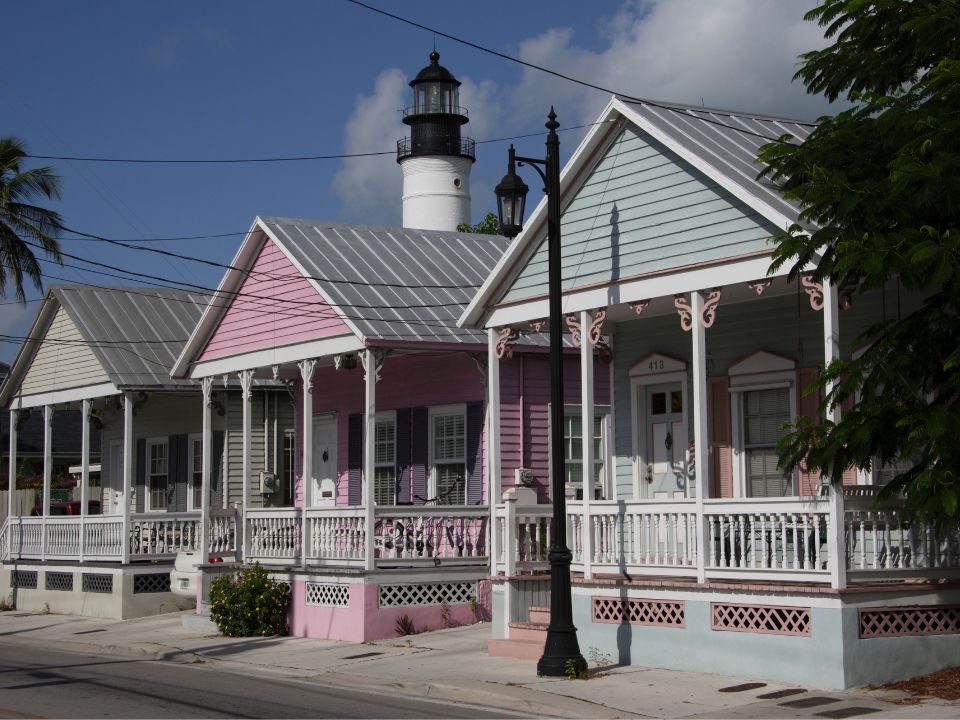
The Price Question
Here is where we have to talk about money. And I’m sorry. I’m not sorry. Yes, I am.
Go ahead. Open Zillow. Type in Key West. Find something “modest.” Something you’d describe to whoever you’re traveling with as “reasonable.” “Quaint.” “Cute, right?”
Those numbers you’re seeing? Those aren’t mistakes. That comma is right where it’s supposed to be. That figure is not the annual rate. That is the nightly rate, in season, for something that has been described as “cozy” by a listing agent who has clearly never had to explain the concept of a shared bathroom to someone who paid Miami Beach prices to share it.
Real estate here doesn’t depreciate. It ascends. So fast that even the housing market keeps looking at the chart and asking what that vertical red line is doing in the middle of its playroom.
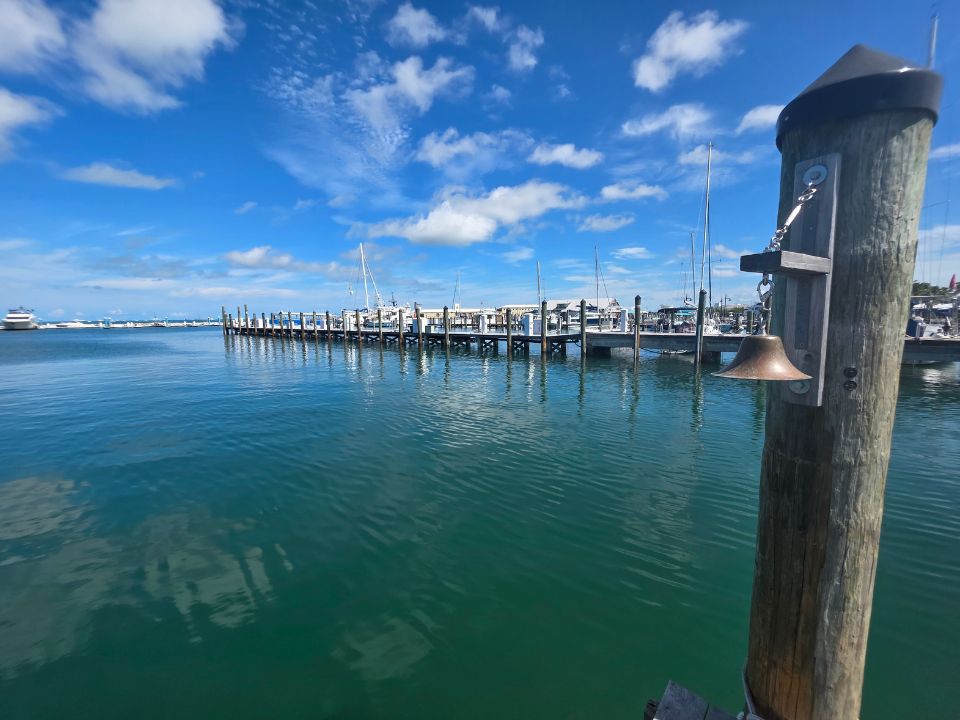
Key West doesn’t sell you a vacation. It runs a quiet psychological operation on you. By the time you’ve hit the second bridge you’re already compromised, and by the time you’ve checked in you’ve lost the will to negotiate and started believing the $34 cocktail was your idea.
Key West charges a myth tax. You’re not paying for the room. You’re paying for the ability to say “We were in Key West.”
And people will nod. And give you points. Because Key West has been in the cultural bloodstream for so long, through Hemingway, through Buffett, through Tennessee Williams, through Carl Hiaasen’s novels about genuinely deranged Floridians doing genuinely deranged things, that just naming it carries weight.
The island knows this. The island has always known this. The tourist board knows this.
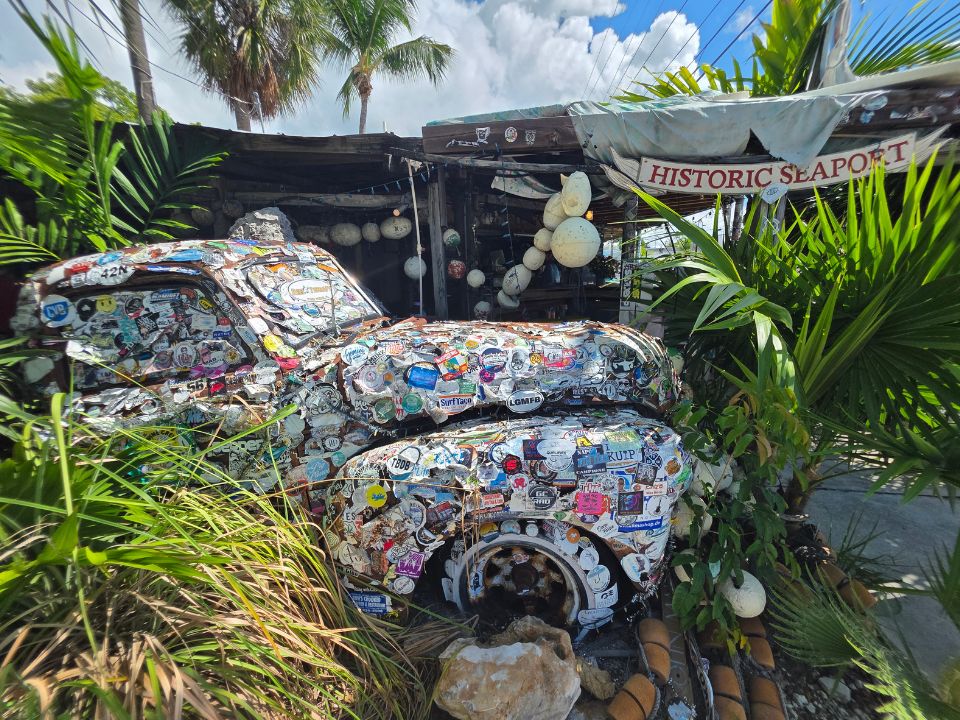
A Brief Digression on Dalí
Key West has always reminded me of Dalí’s paintings. Not because it’s surreal, though it absolutely is, but because of the internal logic. Dalí’s genius wasn’t randomness. It was rigorous, architectural dreamwork. The melting clocks weren’t melting for no reason. They were melting because time IS plastic, because the human relationship to time is a hallucination we all agreed to call reality, and Dalí was just honest about it in a way that made you uncomfortable at a museum gift shop.
“That’s what we get by reading an article by this guy. We’re expecting photos of beach scenes. Some cool shots of rum runners. Maybe a review on Captain Tony’s. And now he’s giving us Dalí.”
My response: “I live in MIAMI. I have things to say.”
Key West does the same thing. It looks like chaos, the chickens, the drag shows at noon, the man on a bicycle with a parrot and a smile CEOs would dream of, but it’s not chaos. It’s an alternative order. It is what happens when a place decides that the rules were always optional and starts asking which ones were actually load-bearing.
Most of them weren’t.
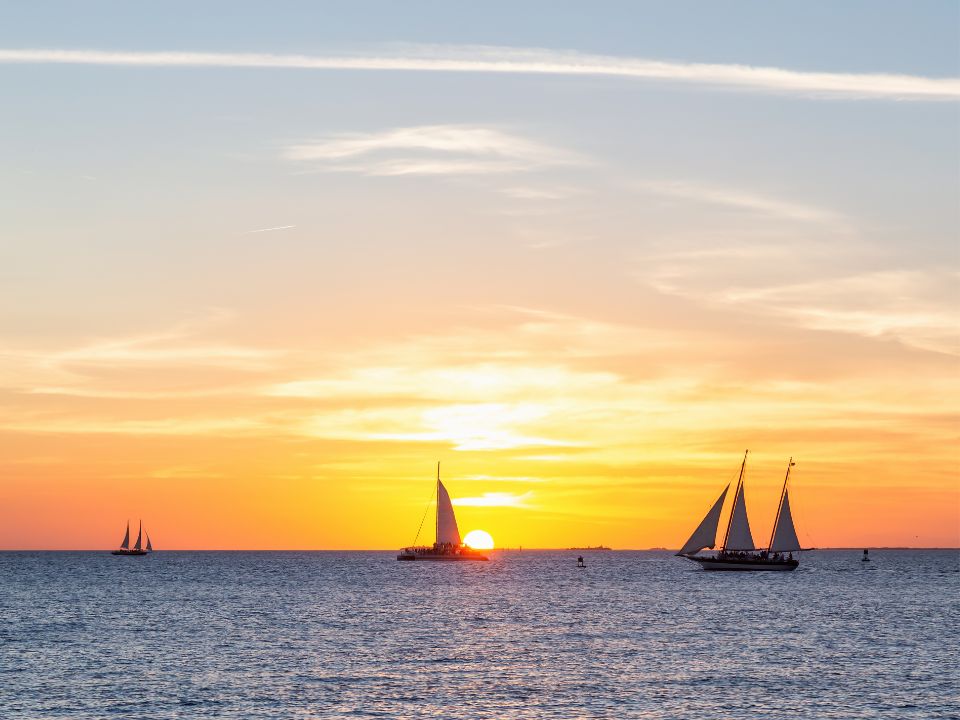
Bergman would have had a different take. Bergman would have sat on the beach at sunset and found it psychologically devastating. The beauty as an accusation. The ocean as an existential void. The chickens as memento mori. Bergman, frankly, would not have lasted a weekend. He would have been on the Overseas Highway by Saturday morning, heading north, shaken, muttering something in Swedish about the unbearable lightness of frozen lemonades.
My opinion, like Tarantino once said: “There are two types of people. Those that like Elvis and those that like the Beatles.” Well, in personal moments of crisis, when you decide “forget it,” you can either mope around in the mountains in Seattle and start reading Bukowski, or you can do the same thing in flip-flops with something tropical in your hand and a Tim Dorsey audiobook in your ear.
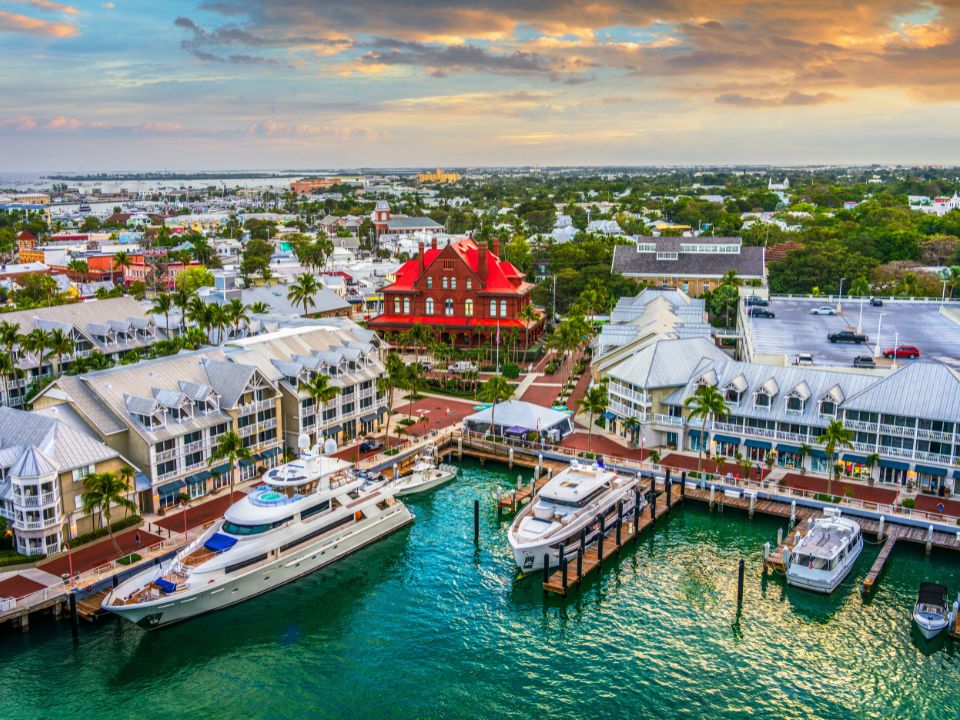
The Real Question
People ask “Is Key West worth it?” the way they ask if Hemingway’s writing is “still relevant” or if jazz is “still a thing.” As if worth is something you can calculate. As if you can put it in a spreadsheet next to the $28 fish tacos and the $350-a-night hotel room and the parking ticket and the sunburn you got on your feet because you forgot your feet had skin and come up with a number.
(If you want the spreadsheet anyway, I already wrote it: the bad things about Key West, itemized, so you can make your mistakes on purpose.)
Worth isn’t a number.
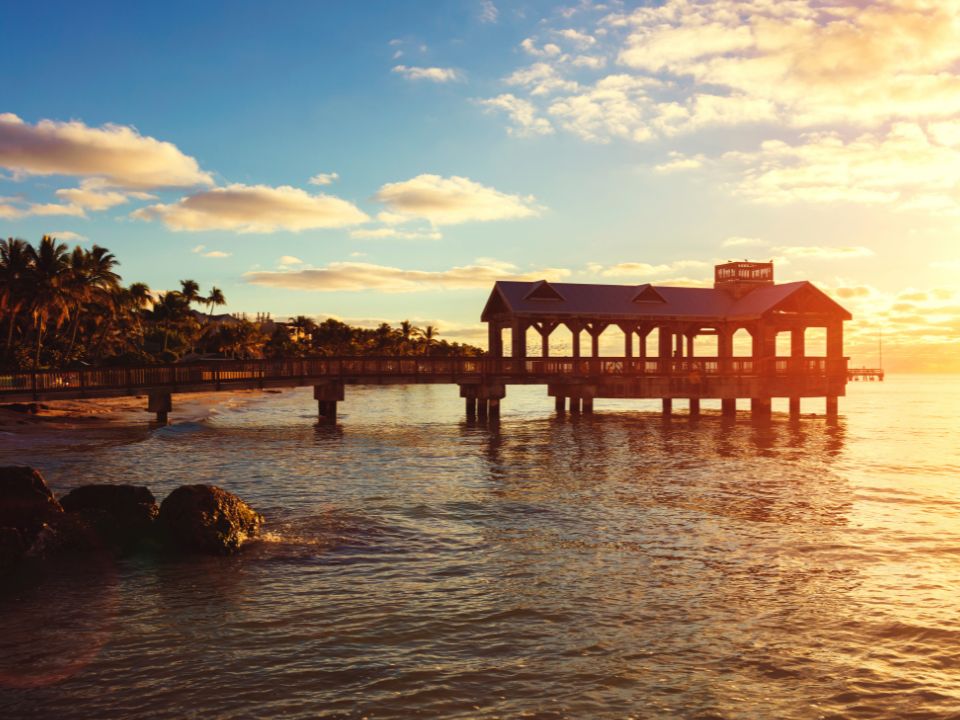
Worth is what happens at Louie’s Backyard at dusk, when the light on the water goes from gold to copper to something that doesn’t have a name in English, and you have a glass in your hand and the Atlantic in front of you and absolutely nothing behind you except the highway you came in on and the life you temporarily left there.
Worth is the Green Parrot Bar on Whitehead Street, where Buffett called it the best bar in the Keys and was right, where there’s no stage, no pretension, no one trying to be anything except present, and a slide guitar player tears into something that goes straight to the back of your throat and stays there.

Worth is the feral chickens. I can’t explain it. I don’t want to. They’re there and they don’t need your approval and they’ve outlasted every administration and every hurricane and every development plan and every influencer who came down here to perform having an experience, and they will outlast you too, and there’s something comforting about that.
Those chickens quote Logan Roy and say: “The President of the U.S. is just a glorified temp.”
Key West is the only place in America that has maintained its essential otherness. Here the freak flag is raised high.
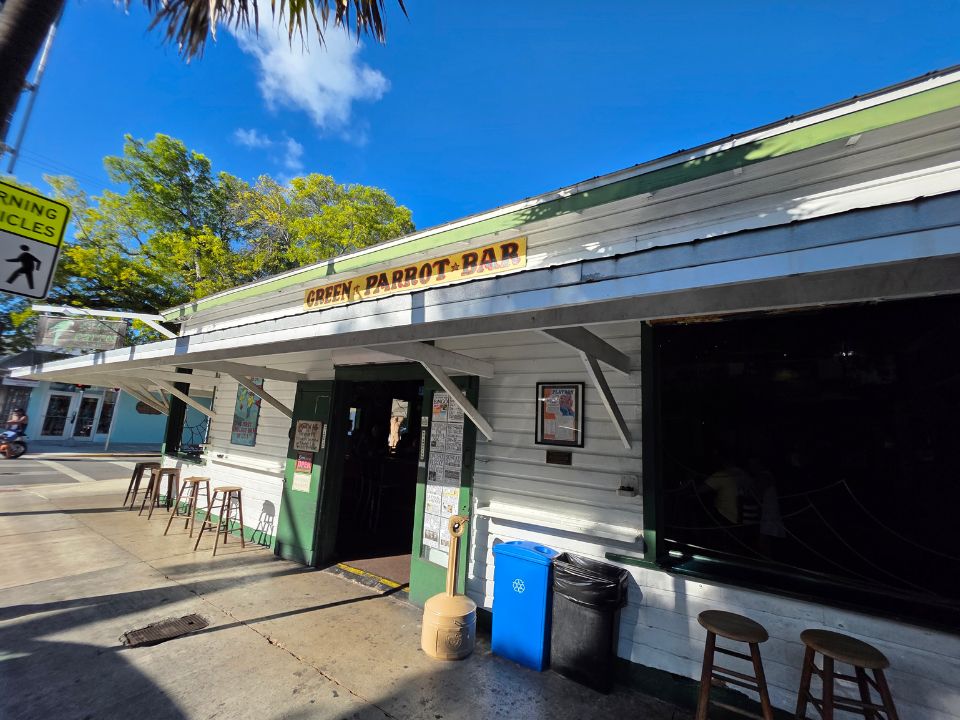
It is still the city that says: come to the end of the road. Come to Mile Marker Zero. Come to where the highway stops and the ocean starts and the chickens don’t care what you think. Where Diogenes would have been comfortable and then politely asked to leave. Where Tarkovsky would have wept quietly and made three hours of pure cinema out of a bar stool.
Ask yourself how far you drove to get here. And whether you’d do it again. You will. You won’t, because you’re out of dough and your kids want Disney. Because, well, there is no Elsa in Key West.
The island doesn’t need to be cheap or affordable. It needs turnover. You don’t get charged what something is worth to live with. You get charged for what it’s worth to experience. That sunset, on the pier, at the celebration, is worth a story. And in Key West, the story is the whole point.
What do you think? Is Key West Worth it? Let us know in the comments.