Heads up: some links on this page are affiliate links. If you book through them, miamitake.com may earn a commission.
In this guide
Congratulations, You Booked a Vacation Inside a Ghost Trap
Is Key West haunted?
HELL YES.
Sit down. Pour yourself something cold. Preferably something served in a glass shaped like a coconut, a pirate skull or a parrot that has seen things. We have some explaining to do. Because Key West is not just a tropical paradise where people go to melt into a lounge chair, watch sunsets, wear linen shirts they wouldn’t be seen in anywhere north of Miami, and slowly transform into human versions of a Margaritaville totem.
Key West is a supernatural cul-de-sac. A paranormal Mardi Gras. A haunted fish tank with a cover charge.
One of the great recurring ideas in ghost folklore is that ghosts can become trapped by certain boundaries: places where they died, places where they suffered, places where their unfinished business has apparently been sitting around for 200 years waiting for someone to invent a flashlight app. In some traditions, open water is treated as a barrier between the living and the dead.
Now, whether ghosts actually have a maritime immigration policy is a question for another day. I don’t know if the afterlife requires a passport, whether deceased pirates get diplomatic immunity, or if there’s a spectral TSA checkpoint somewhere between this mortal coil and eternity confiscating bottles of ectoplasm over 100 milliliters.
Key West Is the Ultimate Paranormal Containment Facility
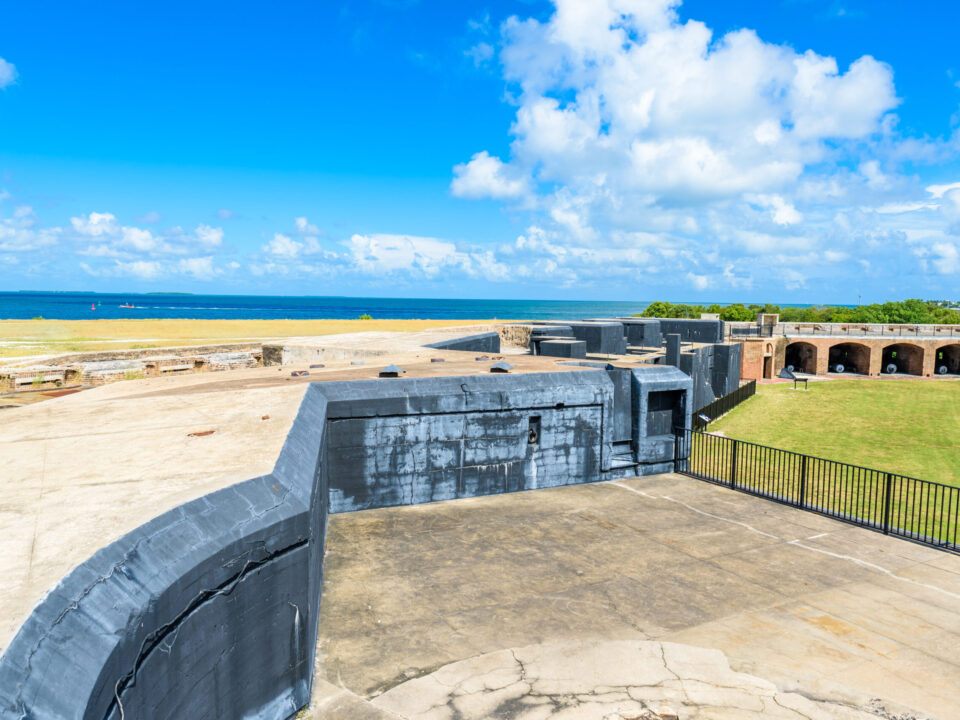
But consider Key West. An island about 4 miles long and 1 to 2 miles wide, depending on who’s measuring, surrounded by the Atlantic Ocean and the Gulf of Mexico, sitting at the end of a chain of islands that stretches away from mainland Florida like the last few vertebrae of a crocodile that got run over by a tourist on a rental scooter.
If the water-trapping theory holds even a fraction of its supernatural weight, Key West is basically the ultimate paranormal containment facility.
It’s the Ghostbusters’ containment unit, except the whole island is the box.
Remember that glowing contraption in the basement? The one containing all those angry ghosts until some meddlesome environmental official started screwing around with it and nearly turned New York City into a supernatural microwave dinner?
That’s Key West.
Except nobody installed an off switch. The containment unit has a gift shop and every ghost is Slimer. The wraiths have had centuries to get comfortable. And every Halloween, thousands of tourists arrive voluntarily, pay money to hear about the departed, and then go back to their hotel rooms wondering why the air conditioner sounds like a Union soldier choking on a crab cake.
And there are reasons people keep telling these stories.
Bone Island
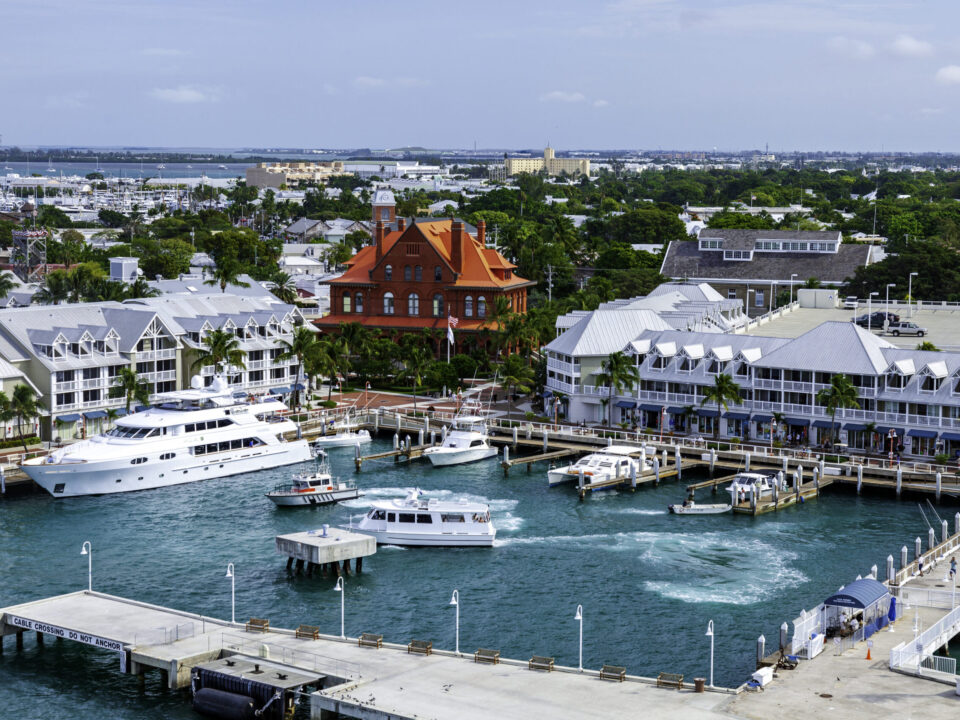
Key West was known to Spanish explorers as Cayo Hueso — roughly, “Bone Island.” The name’s precise origin is debated, but early accounts and local historical tradition associate it with scattered bones found on the island. It became a strategically important port, a haven for wreckers, a crossroads for pirates and traders, and a place where the sea routinely delivered people to their final appointment with the universe.
Shipwrecks. Disease. Executions. Yellow fever. Sudden deaths in a hot, isolated town before modern medicine could reliably distinguish between a bad fever and a one-way ticket. It was “A Million Ways to Die in the West,” the movie and the Alan Jackson song, with humidity.
And then there were the human beings. Because if you want to understand why Key West has such a spectacular collection of ghost stories, you have to understand that the island didn’t just attract ghosts.
It attracted the living who were already acting like they belonged in a horror movie. Or at the very least an Ed Wood film festival.
There was the man who became obsessed with a woman who had passed and kept her remains for years. Then there was Robert the Doll, a handmade toy with a history so strange that people now apologize to it in writing. And there were tales of executed pirates, restless soldiers, haunted mansions and figures seen wandering through the old streets after the living have gone to bed.
Key West has enough supernatural je ne sais quoi to keep a tour guide employed until the sun burns out.
So, Is Key West Actually Haunted?

And that brings us to the most important question.
Is Key West literally haunted? Is there reliable scientific evidence that ghosts are wandering around looking for unfinished business, revenge or a decent parking spot?
No. There is no conclusive scientific evidence establishing that ghosts exist.
But is Key West one of the most gloriously, happy-go-lucky haunted places in the American imagination?
Oh, absolutely.
And since it’s Halloween season, let’s go digging through the island’s supernatural filing cabinet. We’ll examine the legends, the historical tragedies, the people who make you wonder if the real monsters ever died at all, and the various reasons you might want to keep the lights on tonight.
If you’re here, you’ve already done half the work for me. Thank you. You are the backbone of independent journalism. Please keep clicking things. Now let’s go meet the neighbors who never checked out.
1. Robert the Doll

Robert.
Not Robert De Niro. Not Robert Downey Jr. And not Robert Smith of the Cure, though the latter could probably write an excellent soundtrack for this nightmare.
Robert. The. Doll.
A 40-inch handmade doll dressed in a sailor suit, created around 1904 and given to a young Key West boy named Robert Eugene Otto, who went by Gene. A doll attributed to the German company Steiff. It became Gene’s constant companion.
Now, every child has an imaginary friend. Some children have imaginary friends who live in the closet. Others have imaginary friends who eat imaginary cookies. Some have imaginary friends who are really just a way of processing the emotional trauma of having parents who think a long nap counts as medicine for the madcap deception that is their life.
Gene had Robert.
The family insisted that Gene blamed Robert for things he did wrong. If something happened in the house … Robert. If Gene screwed up … Robert. If the cat went missing … Robert. If something strange happened in the middle of the night … you guessed it … the small sailor-dressed homunculus was the prime suspect. Imagine being a parent in 1904 and having your son insist that the doll sitting in the corner is responsible for the unexplained noises.
You have two choices.
One: seek professional help.
Two: do what generations of parents have done since the dawn of civilization and tell the child to stop making things up because you’re trying to listen to the phonograph.
The Apology Letters
The Robert legend grew over the decades. The doll moved around the house. People said its expression changed. Visitors described hearing strange sounds. The stories continued after Gene was gone, and in 1994 the doll was donated to the Key West Art & Historical Society, which placed it on display at the Fort East Martello Museum.
Yup. You can go visit him. And the museum receives letters from people apologizing to him for perceived disrespect or asking forgiveness for photographing him without permission.
Think about that for a second. We are a species that has split the atom, sequenced the human genome, landed machines on Mars and developed the ability to order a pizza from a toilet and have it arrive by drone.
And yet people are writing apology letters to a doll.
2. Carl Tanzler and the Woman He Wouldn’t Let Go

In 1930, a German-born radiologic technologist named Carl Tanzler, who also went by Count Carl von Cosel, met a young Cuban American woman named Maria Elena Milagro de Hoyos in Key West. She was suffering from tuberculosis. Tanzler became obsessed with her and believed, among other things, that they were destined to be together.
Elena died in 1931. End of story? Oh, you sweet summer child.
Tanzler removed her remains from their resting place in 1933 and secretly kept them for seven years, attempting to preserve and reconstruct them. When the story came to light in 1940, it became a sensational scandal.
Let that sink in. A woman passes. Her family mourns. Life continues, as cruelly and indifferently as life tends to do. Meanwhile, a man decides that mortality is an administrative inconvenience.
Most of us have experienced a breakup where one person refuses to accept that the relationship is over. There are late-night texts. Desperate voicemails. The unwise attempt to rekindle things by sending a message at 2:17 a.m. And there are songs by Olivia Rodrigo that can easily become the soundtrack to a late-night dialing mishap.
Carl Tanzler took rejection by reality to a different department. This was not a man struggling to move on. This was a man who looked at the fundamental biological boundary between here and gone and said, in effect, I reject the premise. Which is fancy speak for “watch me.”
And then he acted on it.
3. Captain Tony’s Saloon
There are places you go for a quiet night. Places you go to meet someone. And places you go because your friends are there, and you’ve already spent 45 minutes trying to figure out whether the person in the group chat meant 7 p.m. or 7-ish, which in Miami can mean anything between 7 and the collapse of Western civilization.
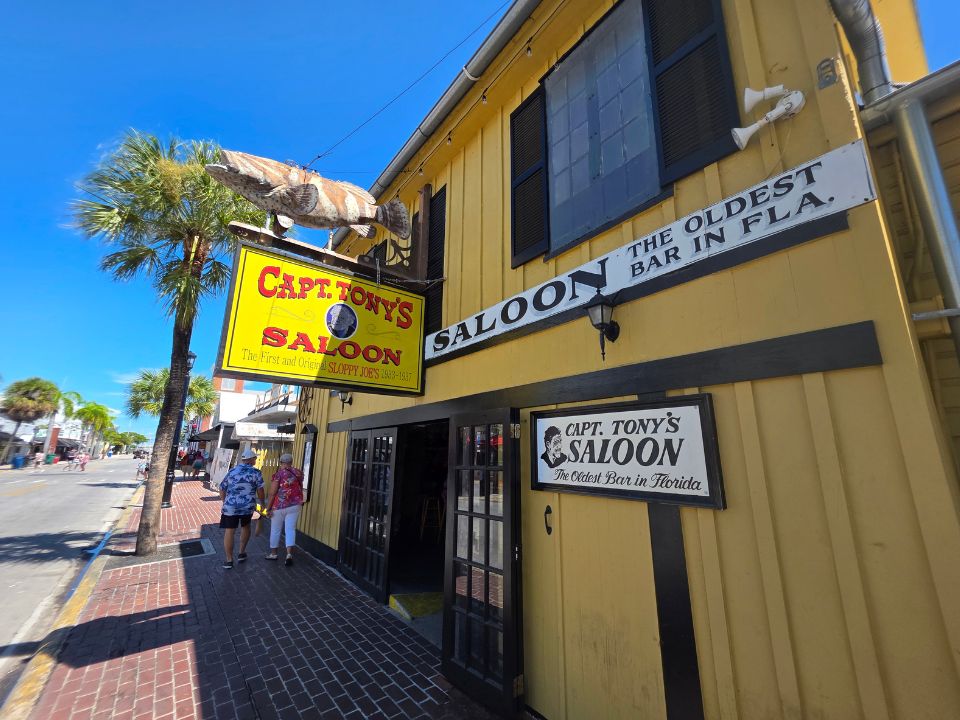
And then there’s Captain Tony’s Saloon. This is one of Key West’s legendary addresses, and its location is associated with some of the island’s darker stories, including tales of hangings and a tree, still growing through the roof, that the saloon says was the gallows.
Now, the details of the hanging stories are not all well documented. Ghost tours have a way of compressing history, rumor and theatrical embellishment into one deliciously spooky campfire story. And facts be damned.
But the broader historical backdrop is real.
Key West became a significant maritime center in the early 19th century. Ships traveled through treacherous waters, wreckers salvaged vessels stranded on reefs, and pirates had long operated throughout the Caribbean. The distinction between legitimate commerce, opportunistic salvage and outright criminality could get very murky indeed.
Rich by Lunchtime, Buried by Dinner

Picture the island before the cruise ships, before the souvenir shops, before the guy selling a $19 T-shirt that says I SURVIVED DUVAL STREET.
Imagine a place where the sea could make you rich by lunchtime and bury you before dinner.
Picture sailors who never returned home. Survivors who watched their ships break apart on reefs. Men accused of piracy. Men hanged as criminals. Now picture that history being folded into a Friday night. A room where the music is loud, the floor is sticky and the patrons are trying to achieve the spiritual enlightenment that comes from forgetting what time it is.

“Excuse me. I was executed here in 1820, and I have a question about the conch fritters.”
“Sure, buddy. What’s the problem?”
“Not enough conch.”
“Well, sir, you’ve been gone for 200 years. Maybe update your expectations.”
4. The Old Houses of Key West
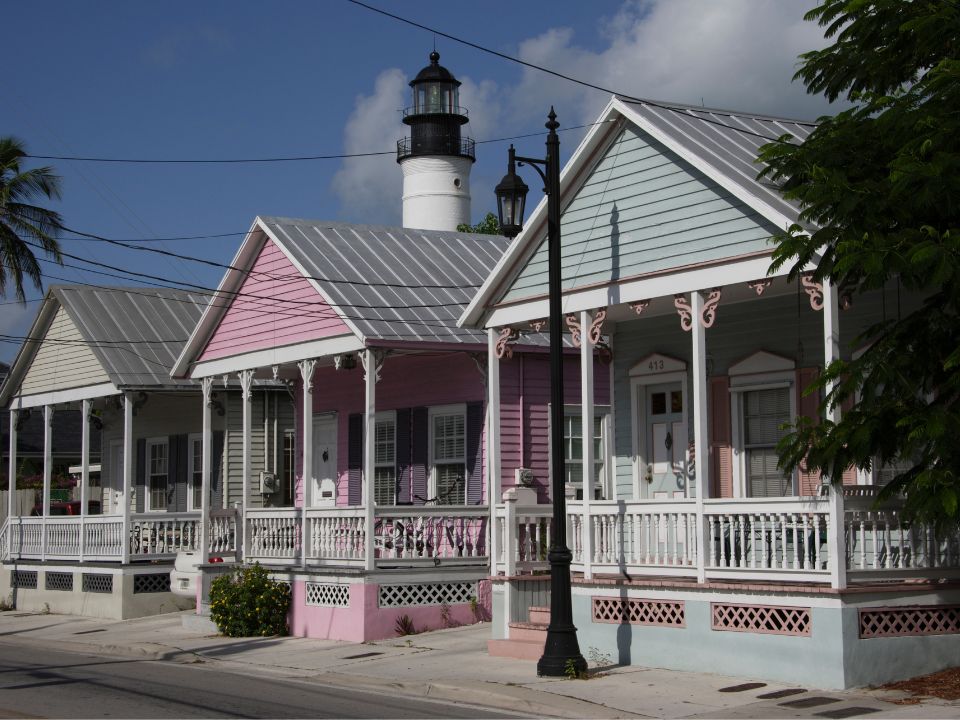
Key West’s historic district is practically designed to make you believe in ghosts … if those ghosts suddenly thought, “Well, if we can’t go to Burning Man, we might as well bring Burning Man to us.”
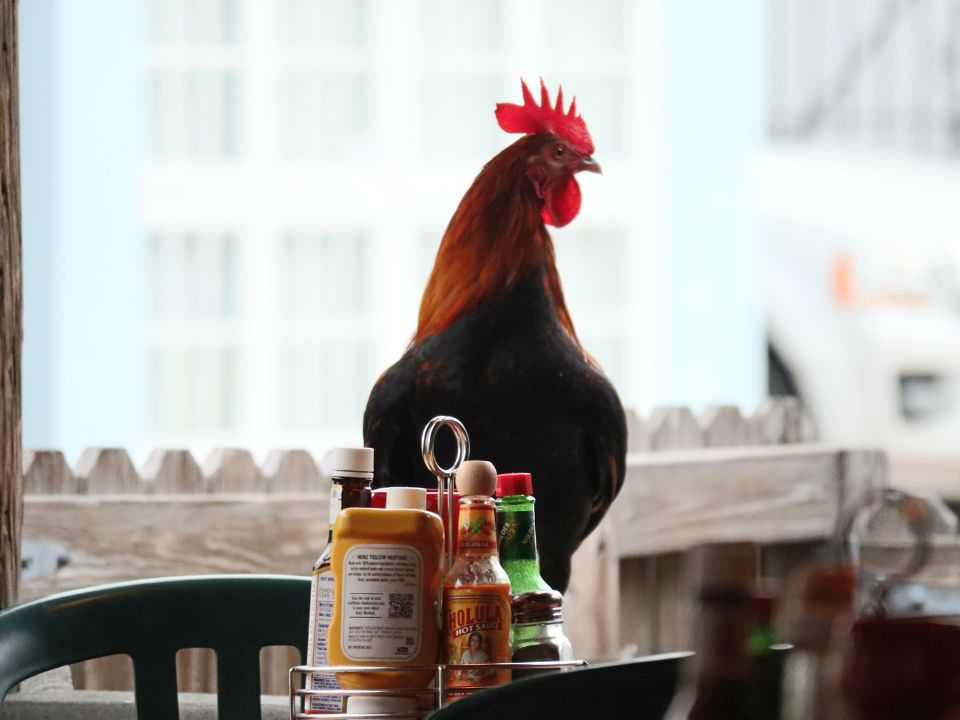
The wooden houses, the wraparound verandas, the narrow streets, the enormous trees, the shadows cast by old shutters. The occasional rooster wandering around as if it has just been informed that the apocalypse has been postponed until Tuesday.
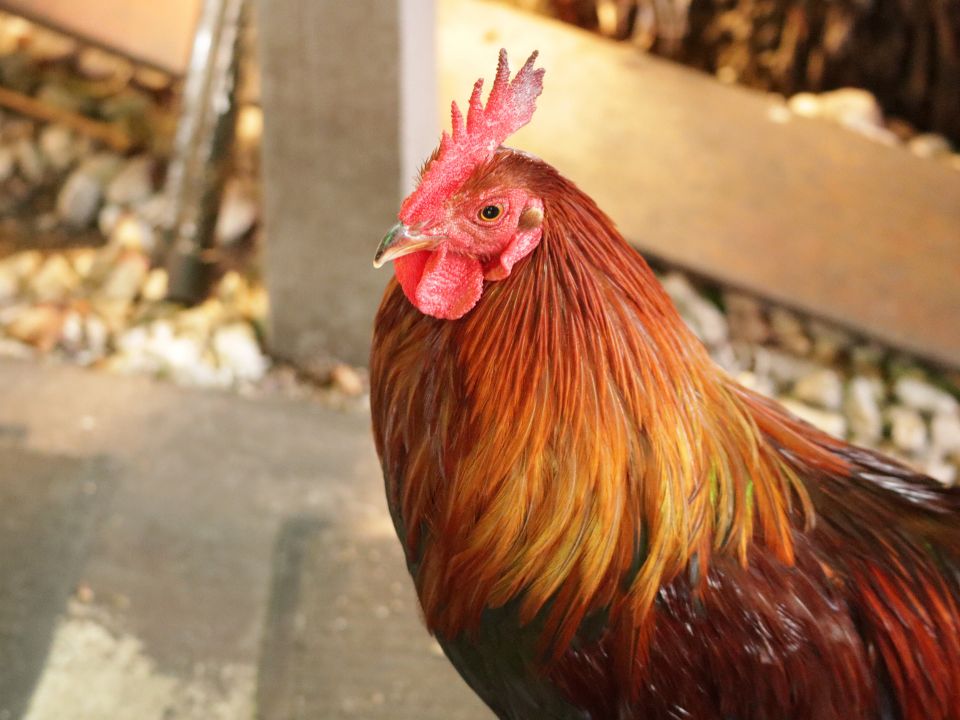
Some cities have history. Key West has a history that looks like it wants to sell you a haunted doll, a slice of key lime pie and a Hawaiian shirt with a label that just says “Elsewhere.”
The properties associated with ghost stories:
- The Artist House, the former Otto family home where Robert the Doll lived for most of a century before he ended up at the museum.
- Marrero’s Guest Mansion. Local paranormal lore associates several of its rooms with the ghost of a former resident, said to return to the place where she once lived.
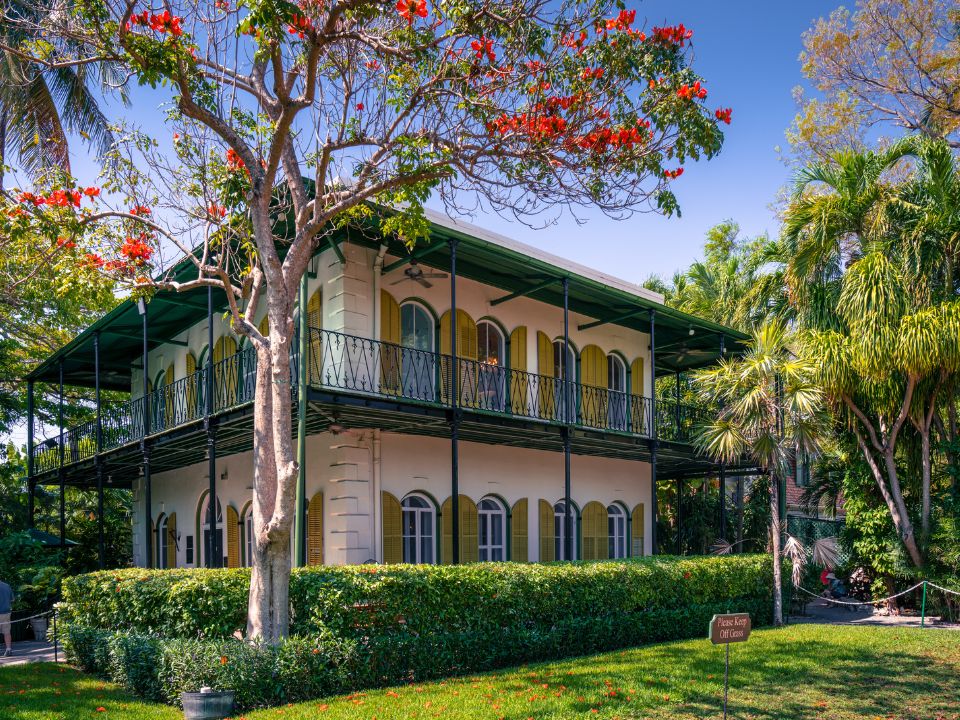
- The Hemingway Home, because if you need ghosts, you might as well get a famous one.
And these are just a few within a half-mile walk of one another.
(Want to sleep in one of them? Here’s what Old Town guesthouses are asking this week. The haunted ones don’t advertise it.)
5. The Cemetery: Where Key West Keeps Its Receipts

Every town has a cemetery. Key West has one that seems to understand the assignment of what a cemetery is for.
“To honor and visit the departed?”
“You who look at a door and say, ‘That’s the only way to enter a house’ … you lack imagination and have not understood the potentiality of windows, in the same way you do not see the potentiality of cemeteries.”
The Key West Cemetery is a landscape of above-ground tombs, family mausoleums, inscriptions and memorials that reflect the island’s unusual history and the practical realities of its high water table. Some graves look like miniature houses. Others are compact monuments to people whose stories have been reduced to a name, a date and a few words carved in stone.
“I Told You I Was Sick”
And then there are the epitaphs.
One of the cemetery’s most famous inscriptions reads:
“I told you I was sick.”
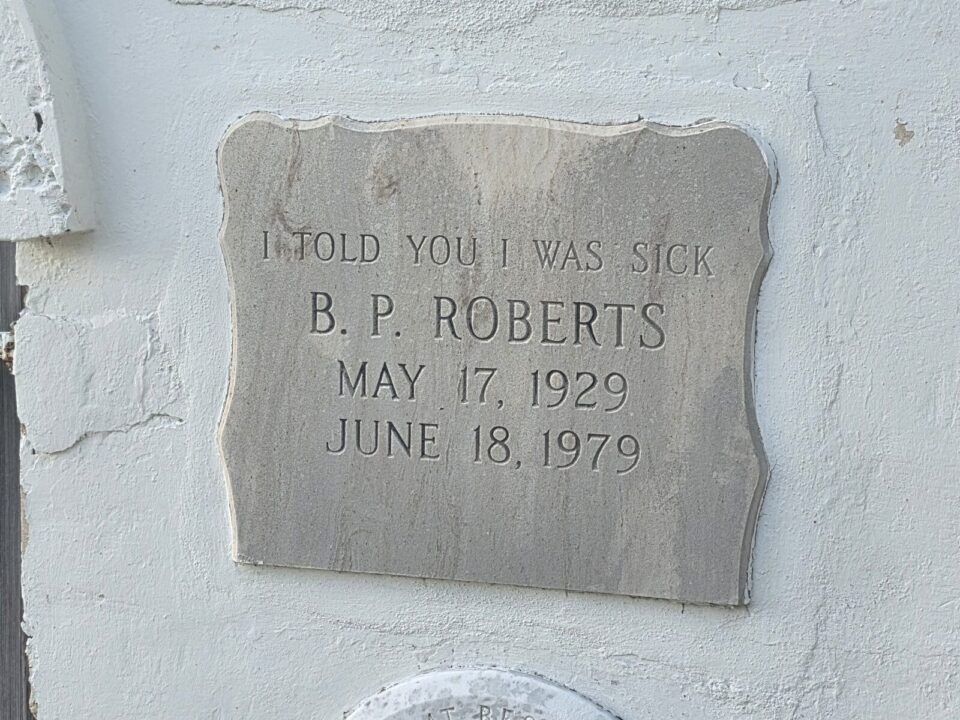
Which is a hell of a final punchline. A woman winning an argument from beyond the grave. Somewhere, a spouse is still furious, because you cannot argue with marble.
The cemetery is also a reminder that Key West’s history was not all sunsets and literary bohemians. Disease, maritime accidents, poverty and the hazards of life in a remote island community left their mark. Yellow fever and other illnesses posed serious threats in the 19th century, when medical knowledge and public-health infrastructure were far more limited than they are today.
And if you want to make a place feel haunted, start there.
6. So, Why Does Key West Have So Many Ghost Stories?
Let’s put the Ouija board down for a moment and examine the machinery. Why Key West? Why not Boise, or Cleveland? And why isn’t there a thriving industry of ghost tours in a shopping mall outside Des Moines?
Well, plenty of places have ghost stories. Key West simply has a particularly potent combination of ingredients.
First, the Geography
Key West is an island, and islands have always been fertile ground for supernatural storytelling. They’re separated from the mainland. They have a clear boundary. You arrive by crossing water, and you leave by crossing it again. In folklore, that makes an island a natural place to imagine the living and the departed becoming separated from the rest of the world.
It’s the perfect setting for a supernatural trap.

Second, the History
Key West’s maritime past involved shipwrecks, perilous voyages, wrecking, piracy, military installations and sudden loss. Its history is not a sanitized collection of attractive buildings and plaques. It is a history of people living in a place where the sea could make or sink a fortune, sometimes within the same afternoon.

Third, the Architecture
Old houses, historic forts, cemeteries and narrow streets give ghost stories somewhere to live. A haunting in a glass office tower is possible in theory, but it lacks atmosphere. Nobody wants to hear about a phantom accountant appearing in a fluorescent-lit conference room to complain about the quarterly earnings report.
Then again, we might have something.
Fourth, the Weirdos
Key West has always attracted people who don’t fit comfortably anywhere else. Sailors. Artists. Writers. Bohemians. Eccentrics. People running away from something, people running toward something, and people who have decided that normal life is a prison and that a tropical island is the ideal place to conduct a series of increasingly questionable experiments in personal freedom.
And some of those experiments have produced genuinely odd stories.
Carl Tanzler. Robert the Doll. The characters whose lives became folklore because the truth was already stranger than the average ghost-tour script.
Fifth, the Tourism Industry
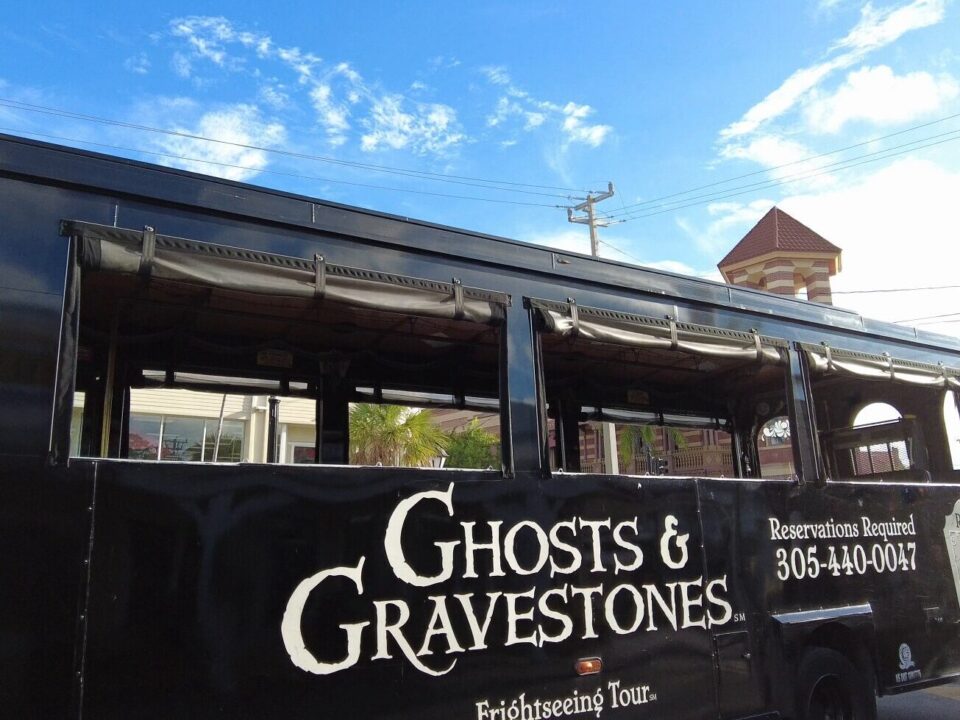
Key West knows how to package its weirdness. Ghost tours run through the historic district. Robert the Doll takes after-dark visitors. Haunted hotels, spooky attractions and tales of restless souls give tourists another reason to explore the island after sunset.
This doesn’t mean the stories are all invented. It means that stories survive when people keep telling them.
A legend can be real or sincere, historically grounded in some respects, embellished in others, and commercially successful all at once. Those things aren’t mutually exclusive.
A real tragedy becomes a local legend. The local legend becomes a ghost tour. Then the ghost tour becomes a T-shirt, and the T-shirt becomes a souvenir. The souvenir ends up in a condo in New Jersey, where it frightens absolutely nobody except the cleaning lady.
So this Halloween, if you’re heading to Key West, take the ghost tour. Visit Robert. Walk past the old houses. Explore the cemetery. Listen to the stories.
Just remember: The most frightening thing you encounter might not be a ghost.
It might be a man in a Hawaiian shirt who has been nursing the same frozen something since noon and has decided that you’re the person who needs to hear his theory about Atlantis.
And unlike Robert the Doll, that guy will absolutely follow you back to the hotel.
Welcome to Key West. The water is beautiful. The roosters are loud. The dead are restless. And nobody, living or otherwise, seems particularly interested in leaving.
Happy Halloween.